
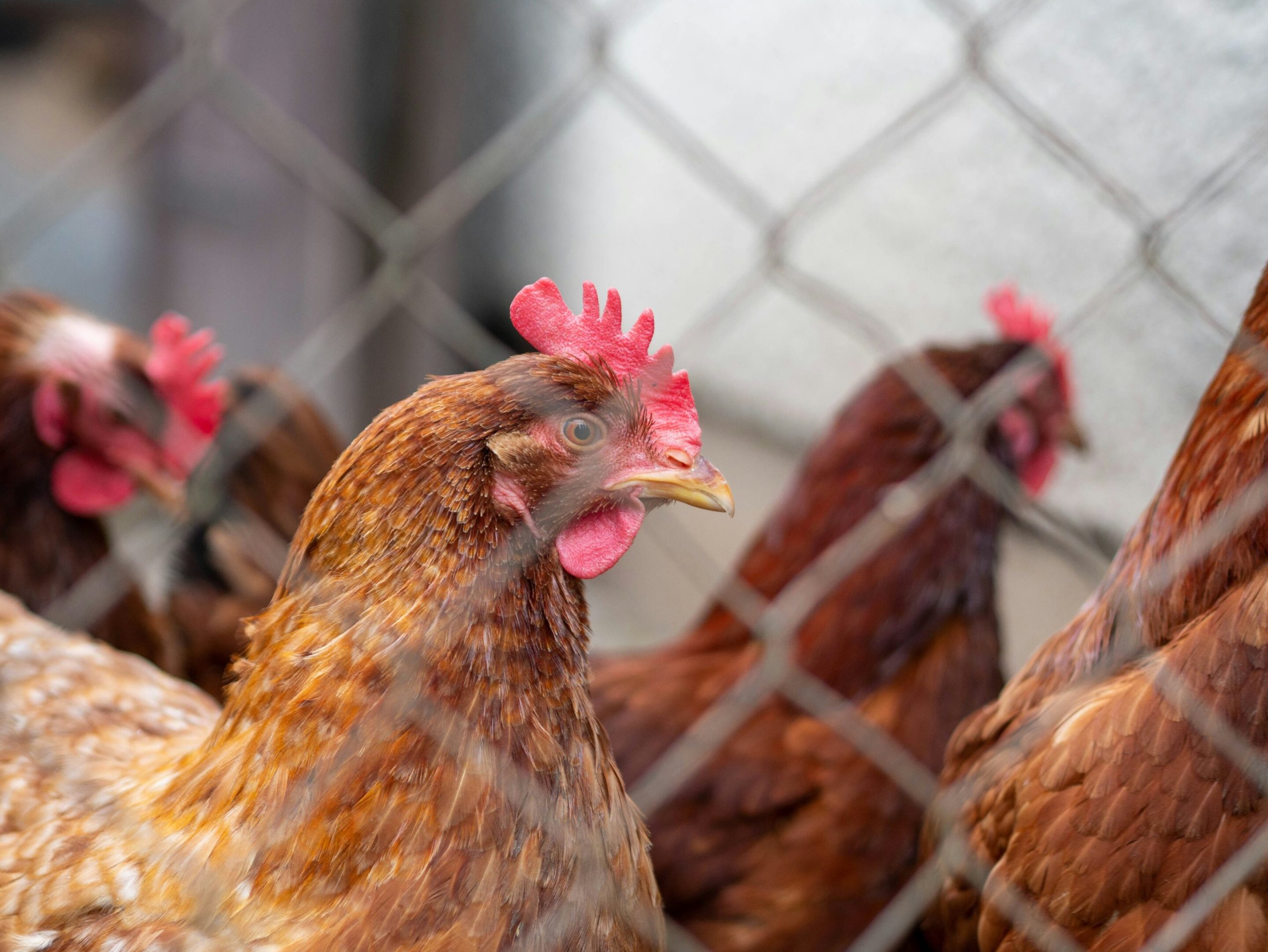
A variant of the bird flu virus, collected in 2016 and no longer in circulation, was just one mutation away from being able to bind to human receptors. This finding underscores that certain bird flu strains have the potential to cross over to humans and possibly trigger a pandemic.
The variant currently circulating does not yet have the ability to bind to human receptors. The two studies, published in PNAS and Nature, were led by Utrecht University researchers Robert de Vries and Geert-Jan Boons.
Viruses use receptors—molecules found on the surface of cells—to attach to and enter those cells. Different animal species have different types of receptors. So for a virus to infect humans and spread from person to person, it must first be able to bind to human receptors.
Bird flu viruses are strains of influenza that circulate in birds, and viruses of the H5N1 subtype can be highly pathogenic, meaning they can cause severe illness. Bird flu viruses have previously crossed over from birds to mammals like minks, seals and, recently, cattle, but have not yet crossed over to humans. In rare cases, people may become ill, but only after close contact with infected animals.
One mutation
De Vries and his research team sought to understand to what extent bird flu viruses would need to change in order to bind to human receptors. They examined two bird flu variants collected in 2016. The results, published in PNAS, were striking: one variant required several modifications, but the other needed just one mutation to bind to human receptors.
“We were really shocked,” said De Vries. “It was very close. We do not yet know if this variant of the virus could have actually replicated in human cells. However, we do see that these viruses often already have the mutations that allow replication in other species. This is also what enabled them to spread so easily to other mammals.”
Birds, not humans
The variant that was just one mutation away from binding to human receptors is now no longer in circulation. De Vries, Boons and colleagues, in collaboration with researchers at the University of Georgia, examined whether the avian flu variant currently circulating in American cattle could also bind to human receptors. While an earlier study suggested it could, Boons, De Vries and their colleagues were not convinced.
The new research published in Nature now shows that the virus does bind to bird receptors, but not to human ones. De Vries said, “Human receptors in our airways and lungs are quite specific. Cow receptors are much more similar to those of birds than to humans. If a virus can bind to bird receptors, it often means it cannot bind to human receptors.”
Code Orange
That is why, according to De Vries, this is not a “Code Red” situation yet. But the new findings serve as a warning.
De Vries adds, “It is crucial to closely monitor the virus and thoroughly test any new variants. While the variant circulating in American cattle does not bind to human receptors, we see that it can, to some extent, bind to human tissues. We do not yet know exactly how that works, but it indicates that something significant is happening, and we need to stay vigilant.”
De Vries points out that there is little attention in the Netherlands to the bird flu currently circulating in the United States. Even though he believes the question is not if the virus will reach Europe, but when.
“The virus really needs to be monitored properly,” he stresses. “But right now, the U.S. is not doing enough. In the Netherlands, if bird flu is detected on a chicken farm, the farm is culled. That is a drastic measure, but it is also an effective way to prevent the virus from evolving further. In the U.S., however, they do not take this step because of economic concerns and this is really a problem.
“They also see the virus in cats, which drink raw milk from cows that contains a lot of the virus. In addition, seventy people have already fallen ill from it.”
“These outbreaks are a result of how we handle animals and nature,” says De Vries. “If we continue with intensive livestock farming like this, we will keep bringing these kinds of outbreaks upon ourselves.”
More information:
María Ríos Carrasco et al, The Q226L mutation can convert a highly pathogenic H5 2.3.4.4e virus to bind human-type receptors, Proceedings of the National Academy of Sciences (2025). DOI: 10.1073/pnas.2419800122
Pradeep Chopra et al, Receptor-binding specificity of a bovine influenza A virus, Nature (2025). DOI: 10.1038/s41586-025-08822-5
Citation:
Bird flu studies show variant from 2016 was one mutation away from binding to human receptors (2025, April 22)
retrieved 22 April 2025
from https://medicalxpress.com/news/2025-04-bird-flu-variant-mutation-human.html
This document is subject to copyright. Apart from any fair dealing for the purpose of private study or research, no
part may be reproduced without the written permission. The content is provided for information purposes only.