
Social media has a way of making us analyze every little thing about our appearance. Why is this eyebrow arching higher than the other? Maybe your left cheekbone is sharper than the right, or you’ve got a so-called “bad” side that’s less snatched.
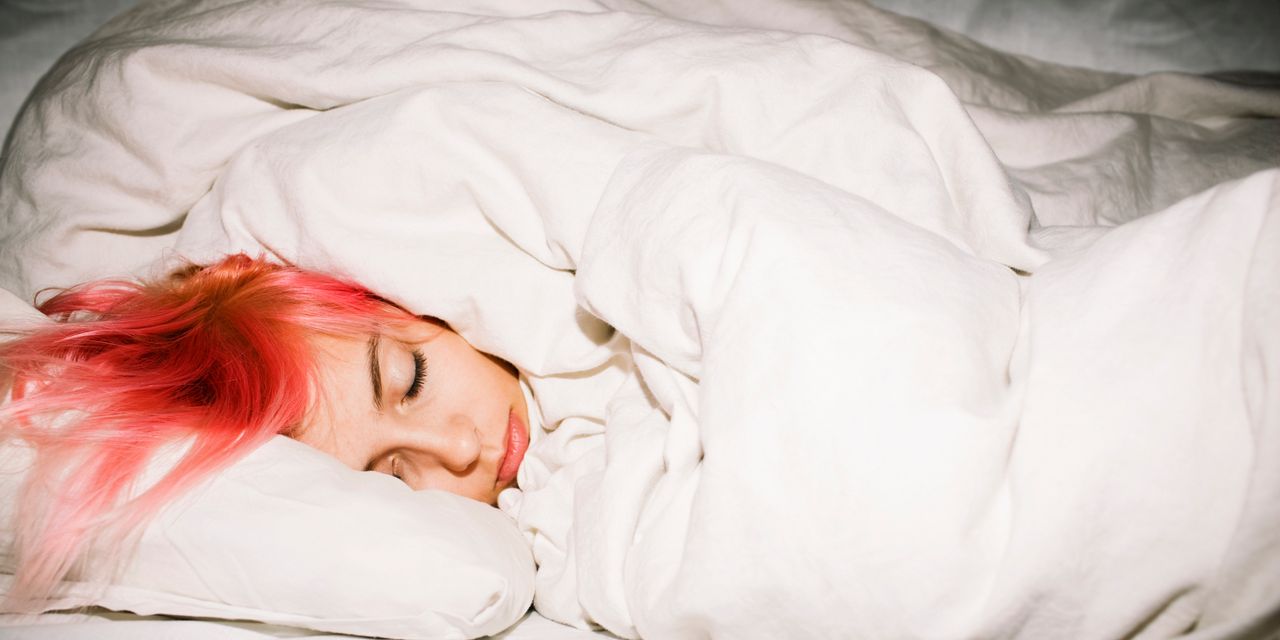
If you’ve ever found yourself fixating on your “facial asymmetry,” you’ve probably stumbled upon a few TikToks claiming that side-sleeping is to blame. In theory, it kind of makes sense: Surely pressing the same part of your face into a pillow for years might make it more “squished,” less defined, or slightly lopsided. The reality is, “All of us are a little asymmetric,” Melanie Palm, MD, board-certified dermatologist at Art of Skin MD in San Diego, tells SELF—but is it really because of how you sleep? We asked experts to set the record straight about this viral beauty myth.
So…why is my face asymmetrical?
For starters, blame genetics—none of us are born perfectly symmetrical, Prem Tripathi, MD, board-certified facial plastic surgeon at Bay Hills Plastic Surgery in Alamo, California, tells SELF. But in today’s world, where social media has influenced us to be our own worst critics, it’s easy to become hyperaware of every little inconsistency. We’re also not used to seeing our faces inverted or flipped, Dr. Tripathi adds, which can make any natural asymmetries appear more “off” or jarring than they actually are.
Beyond genetics, certain environmental factors can influence your face shape. More so than your sleep position, experts say chewing habits play a bigger role. In fact, some research has shown that consistently using one side of your mouth to eat can strengthen and grow those muscles, potentially leading to subtle imbalances in the lower half of your face.
It’s also natural for our faces to look more uneven as we age. That’s because, when we’re younger, “we have a ton of volume on our face,” Dr. Palm explains. “We have much more soft tissue, which can disguise small skeletal asymmetries.” Over time, however, we naturally lose that volume (particularly in the cheeks and eyelid region), making some of those structural bony differences more noticeable.
Could your sleeping position really be to blame?
Okay, so what about lifestyle habits—like the way we sleep? There isn’t any solid evidence to show that lying on your side is the reason you’re asymmetrical. But according to Dr. Tripathi, this little TikTok theory likely stems from a popular 2016 study, which suggested side-sleeping (and that face-to-pillow contact) could contribute to creasing and wrinkles on the part of your face you snoozed on. While this could theoretically make your face appear uneven, there are also a few important caveats to consider, per Dr. Palm and Dr. Tripathi.
For one, this is just one small, limited literature review, Dr. Tripathi points out—not definitive proof that your pillow is to blame for any lopsidedness. What’s more, the research didn’t single out sleeping position as the only culprit of fine lines: Other factors such as uneven sun exposure, for instance, can cause one half of your face to age faster and appear “saggier,” “looser” or “wrinklier.”